Lumberjanes
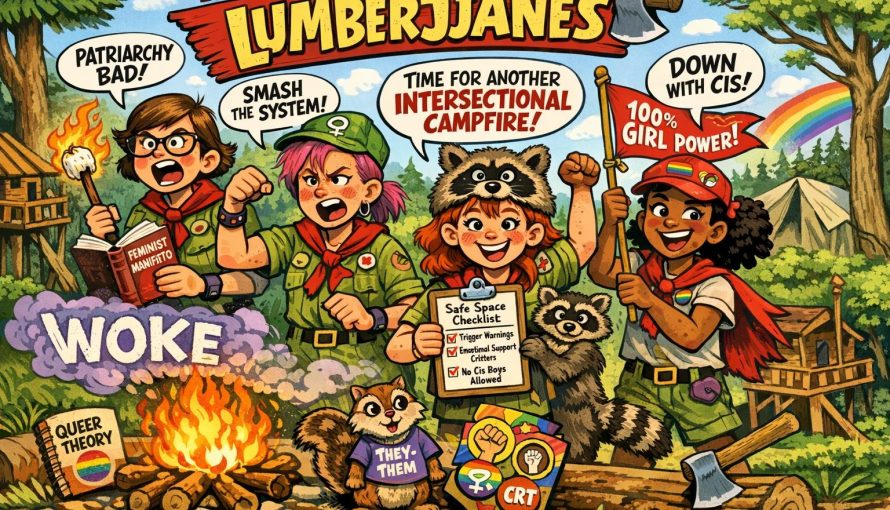
The Concept
“Lumberjanes” is a comic book series that combines elements of fantasy, adventure, and character-driven storytelling within a camp setting. Created by Shannon Watters, Grace Ellis, and Noelle Stevenson, with primary artwork by Brooke Allen in its early run, the series debuted in 2014 through BOOM! Box, an imprint of Boom! Studios. From its outset, it distinguished itself through its focus on a group of young protagonists navigating both ordinary camp experiences and extraordinary supernatural encounters.
At its core, the concept of “Lumberjanes” revolves around the interplay between the familiar and the fantastical. The framework of a summer camp provides structure and relatability, while the introduction of mythological creatures, secret societies, and unexplained phenomena expands the narrative into speculative fiction. The series does not treat these elements as anomalies to be feared or avoided; instead, they are presented as integral parts of the world that the characters learn to understand and engage with. This approach allows the story to maintain a consistent tone that blends humor, curiosity, and problem-solving.
Another defining aspect of the concept is its emphasis on cooperation rather than competition. While many adventure narratives rely on conflict between characters, “Lumberjanes” consistently places value on collaboration. Challenges are typically resolved through collective effort, combining the different abilities and perspectives of the group. This orientation toward teamwork shapes both the plot progression and the interpersonal dynamics among the characters.
Main Characters
The narrative centers on five primary characters: Jo, April, Mal, Molly, and Ripley. Each of them brings a distinct set of characteristics that contribute to the group’s overall dynamic. Their interactions form the backbone of the series, often driving both the emotional and narrative arcs.
Jo is frequently depicted as logical and detail-oriented, with a strong inclination toward science and analysis. Her approach to problem-solving often involves observation and deduction, which provides a counterbalance to more impulsive personalities within the group. April, by contrast, is energetic and strategic, often taking initiative in uncertain situations. Her enthusiasm can act as a catalyst for action, even when the group faces unfamiliar or potentially dangerous circumstances.
Mal occupies a more introspective role at times, offering a perspective grounded in personal reflection. Her relationships with the other characters, particularly Molly, are explored with attention to subtle emotional development. Molly is characterized by her resourcefulness and her affinity for animals, traits that frequently become relevant when the group encounters creatures within the forest. Ripley, the youngest of the group, contributes a sense of spontaneity and unconventional thinking. Her behavior, while unpredictable, often leads to creative solutions that others might overlook.
The composition of this group allows for a range of perspectives without reliance on rigid archetypes. While each character has identifiable traits, they are not confined by them; instead, they evolve gradually through their experiences. The series also incorporates broader representation in terms of identity and relationships, presenting these aspects as natural components of the characters’ lives rather than as isolated narrative devices.
Setting and Plot
The primary setting, Miss Qiunzella Thiskwin Penniquiqul Thistle Crumpet’s Camp for Hardcore Lady Types, functions as more than a backdrop. It is an active environment that shapes the narrative. The camp’s structure, including its system of merit badges and organized activities, provides a framework within which the characters operate. At the same time, the surrounding forest introduces unpredictability, serving as a source of ongoing mystery.
Plotlines in “Lumberjanes” often begin with relatively simple premises—earning a badge, exploring a new area, or completing a camp assignment—but quickly expand into more complex scenarios. The discovery of supernatural elements is typically gradual, allowing the characters to adapt and respond rather than react with disbelief. Over time, recurring motifs such as ancient symbols, secret organizations, and mythological references contribute to a broader narrative continuity.
The forest itself is depicted as a layered environment containing multiple realms of meaning. On one level, it is a physical space filled with hidden paths and unusual landmarks. On another, it operates as a gateway to encounters with beings drawn from various mythologies, including yetis, selkies, and deities inspired by Greek mythology. These encounters are not presented in isolation; they often connect to larger story arcs that unfold across multiple issues.
A significant aspect of the plot structure is its balance between episodic and serialized storytelling. Individual issues frequently present self-contained challenges, allowing new readers to engage with the series at multiple entry points. At the same time, longer narrative threads develop gradually, rewarding continued engagement with deeper layers of context and character development.
Art and Visual Style
The visual presentation of “Lumberjanes” is a key component of its identity. Brooke Allen’s initial artwork established a style characterized by clean lines, expressive character designs, and a dynamic sense of movement. This approach supports the narrative by making action sequences easy to follow while also emphasizing the personalities of the characters through visual cues.
Color plays a central role in defining the atmosphere of the series. Bright and varied palettes are used to distinguish different settings and moods, from the warmth of campfire scenes to the more surreal tones associated with supernatural events. The use of color is not merely decorative; it contributes to the reader’s understanding of shifts in tone and context.
As the series progressed, additional artists contributed to the visual interpretation of the story. While each brought individual stylistic elements, there was a consistent effort to maintain visual continuity. This ensured that transitions between issues did not disrupt the reader’s immersion. Variations in artistic style were often used to highlight particular narrative moments, such as dream sequences or encounters with particularly unusual entities.
The panel layouts tend to prioritize clarity and pacing. Action sequences are structured to guide the reader’s eye smoothly across the page, while quieter moments allow for more detailed expressions and environmental context. This balance between action and stillness supports the broader narrative rhythm, ensuring that both plot progression and character interaction receive adequate emphasis.
Recognition and Impact
Since its debut, “Lumberjanes” has received recognition from both critics and readers, reflected in awards such as the Eisner Award and the GLAAD Media Award. These acknowledgments are tied not only to the series’ storytelling and visual execution but also to its approach to representation. The inclusion of diverse identities and relationships is integrated into the narrative without being treated as a secondary feature, contributing to its broader cultural relevance.
The series has also demonstrated adaptability across different formats. In addition to its comic book run, “Lumberjanes” has been adapted into prose novels that expand on the original material. These adaptations retain the core elements of the story while exploring new narrative possibilities, indicating the flexibility of the source material. Discussions and developments related to potential multimedia adaptations further underscore its influence within contemporary storytelling.
Its impact extends beyond its immediate audience. “Lumberjanes” has contributed to ongoing discussions about the scope of storytelling in comics, particularly in relation to genre blending and audience inclusivity. By combining elements traditionally associated with different genres—such as adventure, slice-of-life, and fantasy—it challenges conventional categorizations and demonstrates the viability of hybrid narratives.
For more details on the series, you can explore other resources such as Boom! Studios’ official website for updates and more information on the series’ progression and current issues.