Archie Comics
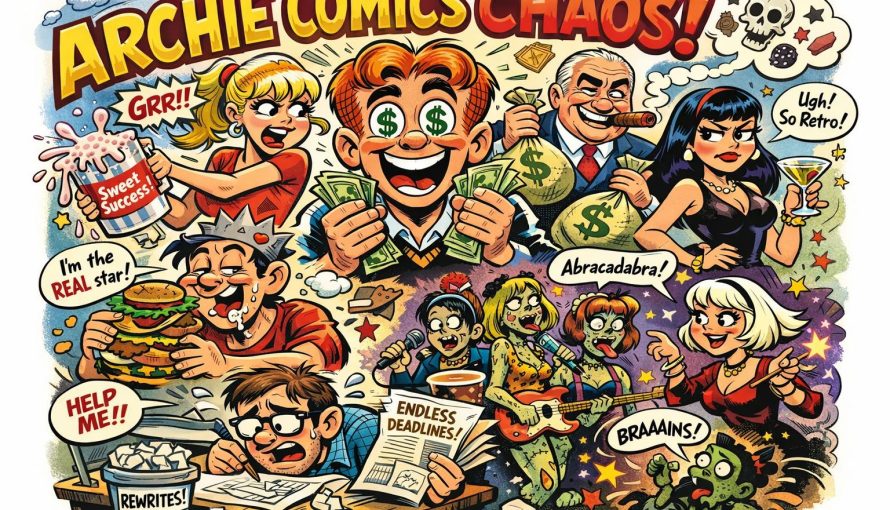
Introduction to Archie Comics
Archie Comics, an American comic book publisher, is best known for its long-running series centered on the fictional teenagers of Riverdale, a small and largely idealized town. Since the early 1940s, the company has developed a stable narrative framework built around everyday adolescent experiences, including school life, friendships, romance, and minor social conflicts. Founded in 1939 under the name MLJ Magazines, the publisher initially focused on superhero stories, but changing reader preferences during the early 1940s led to a strategic shift toward humor-driven narratives. The introduction of Archie Andrews marked a turning point, establishing a format that would define the company’s identity for decades.
Unlike many comic publishers that rely on serialized action or fantasy arcs, Archie Comics has traditionally favored episodic storytelling. Each issue typically presents self-contained stories that can be read independently, making the material easily accessible to new readers. This approach has contributed significantly to the brand’s longevity, allowing it to adapt to different generations without requiring familiarity with extensive backstory.
Key Characters
At the center of the series is Archie Andrews, a teenager who embodies a generalized version of American youth. His defining characteristic is indecision, particularly in matters of romance. This trait is most evident in his ongoing relationship dynamic with Betty Cooper and Veronica Lodge, which forms a consistent narrative foundation across decades of stories.
Betty Cooper is typically portrayed as practical, academically capable, and personable. Her characterization emphasizes reliability and emotional awareness, positioning her as a contrast to Veronica. Betty’s role often involves stabilizing situations or offering solutions to everyday problems, reinforcing her image as the “girl-next-door” archetype.
Veronica Lodge, by contrast, is defined by her wealth and social status. As the daughter of a successful businessman, she is accustomed to privilege, which frequently influences her behavior and outlook. Her interactions with other characters often highlight class differences, although the tone remains light and comedic rather than critical. Veronica’s competitive relationship with Betty over Archie’s attention serves as a recurring plot device.
Jughead Jones functions as both comic relief and an unconventional counterpoint to Archie. Known primarily for his substantial appetite and preference for independence, Jughead often avoids romantic entanglements altogether. His skepticism and observational role allow him to comment on the actions of other characters, sometimes providing subtle critique within otherwise straightforward narratives.
Reggie Mantle represents a more antagonistic presence within the group. He is frequently depicted as arrogant and competitive, particularly toward Archie. Reggie’s role often involves creating minor conflicts, though these are typically resolved within the same issue. His character adds a dimension of rivalry that helps maintain narrative variety.
In addition to these central figures, the Archie universe includes a wide range of supporting characters, such as Pop Tate, the owner of the local diner, and various classmates and faculty members at Riverdale High School. These individuals contribute to a sense of continuity and community within the stories.
Publication History
The first appearance of Archie Andrews and related characters occurred in Pep Comics #22 in December 1941. At the time, MLJ Magazines was still producing superhero content, but the reception of the Archie feature led to a shift in editorial priorities. The decision to expand Archie-centered stories resulted in the launch of Archie Comics in the winter of 1942, establishing a dedicated platform for the characters.
Throughout the 1940s and 1950s, Archie Comics experienced significant growth, with multiple titles and spin-offs introduced to accommodate popular characters and themes. These included series focused on specific characters, such as Betty and Veronica, as well as thematic variations that explored seasonal settings or particular events.
The publisher maintained a consistent visual style during much of its history, characterized by clean lines, expressive faces, and simplified backgrounds. This approach supported rapid production schedules and reinforced brand recognition. Over time, however, artistic styles evolved in response to broader industry trends and changing audience expectations.
Archie Comics also expanded into other forms of media during the mid-20th century, including radio programs, animated television series, and licensed merchandise. These extensions helped solidify the characters as part of broader popular culture, extending their reach beyond print audiences.
The Archie Universe
The fictional setting of Riverdale serves as a stable backdrop for the series. It is depicted as a cohesive, self-contained community where most events occur within a limited number of recurring locations, such as Riverdale High School, Pop Tate’s diner, and the homes of main characters. This consistency allows readers to quickly orient themselves within the narrative, even when encountering isolated issues.
While the primary focus remains on everyday situations, the Archie universe is notable for its flexibility. Storylines occasionally incorporate elements of fantasy, science fiction, or alternate realities. These deviations are typically presented as temporary departures rather than permanent shifts, allowing the core setting to remain intact. Examples include time travel scenarios, dream sequences, and speculative futures featuring older versions of the characters.
The structure of the Archie universe does not emphasize strict continuity. Events in one story are rarely required to align with those in another, giving writers significant freedom to explore different interpretations of characters and situations. This approach contrasts with the continuity-heavy models used by many superhero publishers and contributes to the accessibility of the material.
The tone of the series is generally consistent, focusing on light conflict and resolution. Issues often revolve around misunderstandings, school assignments, social events, or romantic dilemmas. Although these scenarios are relatively low in stakes, they provide a framework for character interaction and humor.
Modern Adaptations
In recent decades, Archie Comics has undertaken efforts to modernize its content and presentation. One significant development has been the introduction of updated storylines that place the characters in contemporary contexts, addressing current technologies, social norms, and cultural references. These updates aim to maintain relevance without fundamentally altering the core identities of the characters.
Digital distribution has also become an important component of the publisher’s strategy. Archie titles are now available through various digital platforms, allowing readers to access both new releases and archival material. This transition reflects broader changes in the publishing industry and expands the accessibility of the content.
A notable example of adaptation is the television series Riverdale, which premiered in 2017. Unlike the original comics, the show adopts a darker and more serialized narrative style, incorporating elements of mystery and drama. While the characters and setting are derived from the comics, their portrayal differs significantly in tone and thematic focus. This reinterpretation has introduced the Archie brand to audiences who may not have engaged with the original material.
In addition to television, Archie Comics has explored alternative comic formats and storytelling approaches. Some series present reimagined versions of the characters with more cohesive narrative arcs, while others experiment with genre blending, including horror-themed adaptations. These initiatives demonstrate an effort to diversify the brand while maintaining its recognizable elements.
For more details on Archie Comics and its various adaptations, visit the official website.