Scott Pilgrim
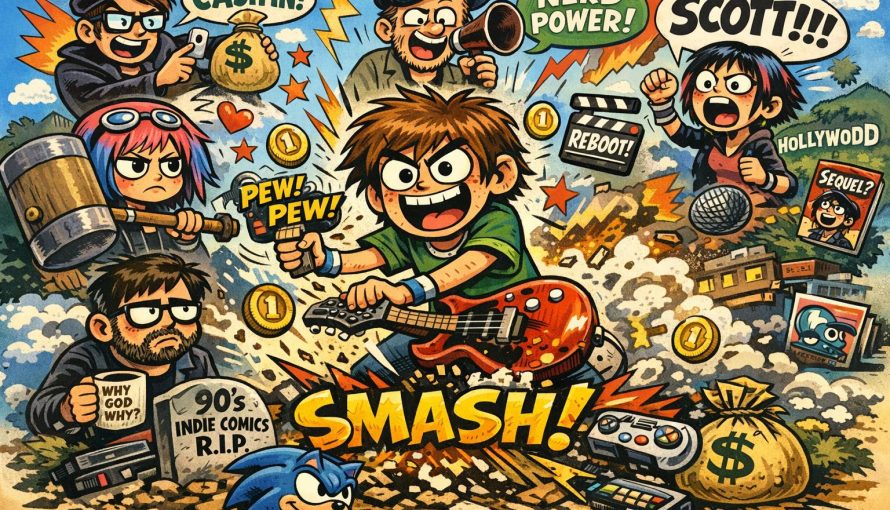
Overview of Scott Pilgrim
The Scott Pilgrim series is a graphic novel collection created by Canadian author and artist Bryan Lee O’Malley. It presents a hybrid narrative that blends elements of romance, action, comedy, and fantasy, set primarily in Toronto, Canada. The story follows Scott Pilgrim, a twenty-something bass guitarist performing in a garage band while navigating a loosely structured adult life. His routine changes significantly when he develops an interest in Ramona Flowers, an American woman with a complex past.
While the premise initially appears simple—a young man attempting to pursue a romantic relationship—the narrative unfolds through stylized conflicts that include exaggerated combat sequences, surreal transitions, and references to video game mechanics. These elements contribute to a distinct storytelling structure that merges grounded interpersonal concerns with fantastical scenarios. The series gradually develops into a study of maturity, consequences, and self-awareness, using humor and stylization to explore these themes.
Publication and Format
The Scott Pilgrim series was published by Oni Press in six volumes between August 2004 and July 2010. Each installment continued the overarching storyline while introducing new characters and refining ongoing narrative threads. The books were initially released in black-and-white, reflecting both manga influences and practical publishing considerations. O’Malley’s artwork drew heavily from Japanese comics, particularly in its expressive characters, dynamic motion, and panel composition.
As the series gained a larger readership, full-color editions were later produced. These versions introduced new visual interpretations through color palettes that enhanced mood, tone, and clarity. The color releases also helped distinguish action sequences and environmental transitions, making the visual storytelling more accessible to readers unfamiliar with black-and-white graphic novels.
The format itself played a significant role in the pacing of the story. Unlike serialized comic strips, each volume had sufficient space to expand on character arcs and thematic development. This allowed the narrative to shift organically from comedic encounters to more reflective moments without losing structural coherence.
Adaptations and Media
The success of the Scott Pilgrim series extended beyond print, leading to multiple adaptations across different forms of media. Each version interpreted the core narrative in ways suited to its format while maintaining recognizable elements of the original work.
Film Adaptation
In 2010, the film Scott Pilgrim vs. the World was released, directed by Edgar Wright. The adaptation condensed the six-volume storyline into a single feature-length narrative. To accommodate this compression, certain character arcs and subplots were simplified or omitted, but the film preserved the central concept of Scott confronting Ramona’s seven evil exes.
The film became notable for its editing style, visual effects, and integration of graphic elements such as on-screen text and symbolic transitions. These techniques mirrored the tone of the original series while also referencing video game interfaces and comic panel structures. Although the film did not initially achieve strong box office performance, it developed a sustained following over time, particularly among viewers interested in stylized storytelling.
Video Game
A video game adaptation titled Scott Pilgrim vs. the World: The Game was released in the same year. Developed by Ubisoft, it adopted a side-scrolling beat ’em up format inspired by arcade games of the 1990s. Players could choose from multiple characters and progress through levels that corresponded to events and locations in the graphic novels.
The game emphasized cooperative gameplay, retro-inspired graphics, and a soundtrack that aligned with the series’ musical themes. In 2021, a Complete Edition re-release introduced the game to modern platforms, preserving its original mechanics while making it accessible to a wider audience.
Animated Adaptation
An animated adaptation was later developed to revisit the source material with a format capable of exploring its narrative in greater depth than the film. Animation provides flexibility in representing the exaggerated visual style of the original comics, including combat sequences and symbolic transformations. This format also allows for a more comprehensive treatment of character development and plot progression across multiple episodes.
Main Characters
Scott Pilgrim serves as the central figure of the series. He is characterized by a combination of passivity and confidence, often avoiding responsibility while maintaining a belief in his own competence. As the narrative progresses, his interactions with other characters reveal inconsistencies in his behavior and perception. Over time, he becomes more aware of his actions and their effects on others.
Ramona Flowers functions as both a character and a narrative catalyst. Her past relationships form the structural basis for the series’ conflicts. Despite her reserved demeanor, she is portrayed with complexity, showing varying degrees of independence, detachment, and introspection. Her presence introduces both emotional depth and external challenges to Scott’s life.
The Seven Evil Exes represent a literalization of past relationships. Each ex is depicted with distinct abilities, personalities, and thematic roles. These confrontations serve not only as action sequences but also as symbolic representations of unresolved emotional history. Through these encounters, the narrative explores the lingering effects of previous relationships on present connections.
Supporting characters, including Scott’s friends, bandmates, and former partners, contribute to the broader context of the story. They provide different perspectives on Scott’s actions and often challenge his assumptions. These interactions expand the narrative beyond a single relationship and emphasize social dynamics within a shared environment.
Thematic Elements
One of the central themes in Scott Pilgrim is the transition from adolescence to adulthood. Characters frequently occupy an intermediate stage, where responsibilities are acknowledged but not consistently fulfilled. Employment, relationships, and personal goals are approached with varying degrees of seriousness, reflecting common experiences in early adulthood.
Accountability is another recurring element. The narrative gradually reveals that many conflicts stem from avoidance of responsibility rather than external circumstances. Scott’s development is closely tied to his recognition of past behavior and willingness to address it. This shift is not immediate but unfolds through repeated confrontations and interactions.
The series also examines the nature of relationships. Romantic involvement is presented as a process influenced by communication, emotional history, and personal growth. The inclusion of the seven evil exes introduces a literal mechanism for addressing past relationships, but the underlying concept reflects a broader idea: individuals bring previous experiences into new connections, which can create complications if left unresolved.
Additionally, the series incorporates identity as a thematic consideration. Characters define themselves through interests, social circles, and creative pursuits, particularly music. However, these identities are shown to be flexible rather than fixed. Changes in perspective and experience lead to reevaluation and adjustment over time.
Humor remains a consistent component throughout the series. Dialogue often includes understated or abrupt exchanges, and visual gags appear within action scenes. These elements maintain a balance between serious thematic content and accessible storytelling.
Cultural Impact
The Scott Pilgrim series has had a notable influence on both graphic literature and broader popular culture. Its integration of visual storytelling techniques, particularly the fusion of Western comic traditions with manga-inspired design, contributed to a wider acceptance of hybrid artistic styles. This approach demonstrated that cross-cultural influences could be effectively combined without compromising narrative clarity.
The series also played a role in expanding the visibility of graphic novels as a medium capable of addressing contemporary themes. By focusing on everyday experiences within a stylized framework, it attracted audiences who might not typically engage with comics centered on traditional superhero narratives.
In addition, the multimedia adaptations reinforced the adaptability of the source material. The film, game, and animated versions introduced different aspects of the story to varied audiences, each emphasizing distinct features such as visual innovation, interactive design, or narrative depth. This multi-platform presence contributed to sustained interest in the series over time.
The aesthetic and structural choices of Scott Pilgrim have influenced other works in comics, animation, and film. Elements such as onomatopoeic visuals, integrated text effects, and game-inspired progression systems have appeared in subsequent projects, reflecting its role as a reference point within contemporary media.
Overall, Scott Pilgrim remains a significant example of how genre blending and stylistic experimentation can support both entertainment and thematic exploration. Its continued relevance is tied to its ability to present recognizable experiences through unconventional formats, maintaining engagement across different audiences and formats.