Fables
Understanding the Purpose of Fables
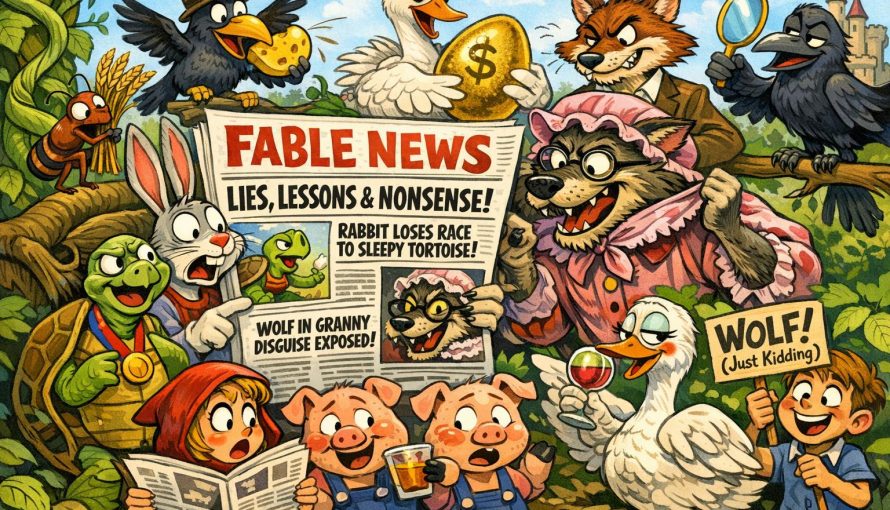
Fables are a form of traditional storytelling that conveys moral lessons, often using animals as characters. These narratives have persisted across centuries and cultures because they communicate complex ideas in a clear and memorable way. Although they are often associated with childhood education, fables are not limited to young audiences. Their structure and underlying messages are designed to address universal aspects of human behavior, making them relevant to individuals of all ages.
At their core, fables serve as a bridge between entertainment and instruction. The stories are intentionally concise, yet they contain insights into ethical conduct, social relationships, and consequences of action. By presenting abstract moral principles through concrete examples, fables allow readers to interpret lessons without the need for direct instruction or formal explanation. This indirect method of teaching has contributed significantly to their enduring presence in oral and written traditions.
Characteristics of Fables
Fables typically contain a few key characteristics that distinguish them from other story forms and support their instructional purpose.
Simplicity: Fables are generally short and direct. Their structure avoids unnecessary detail, focusing instead on a single narrative line that leads clearly to a conclusion. This simplicity ensures that readers can easily follow the progression of events and understand the intended message. The clarity of the storyline allows the moral lesson to stand out without distraction, making it easier to remember and apply.
Use of Animals: One of the most recognizable features of fables is the use of animals as central characters. These animals are anthropomorphized, meaning they are given human qualities such as speech, reasoning, and emotional responses. This technique creates a certain distance between the reader and the events of the story, which can make difficult or uncomfortable truths easier to accept. By observing the behavior of animals, readers may recognize patterns in human conduct without feeling directly criticized or confronted.
Moral Lessons: The defining element of a fable is its moral. This lesson may be explicitly stated at the end of the story or implied through the outcome of the narrative. In either case, the moral addresses fundamental questions about right and wrong, wisdom and foolishness, or cause and consequence. These lessons often reflect broader societal values and norms, reinforcing expectations of behavior within a given culture.
Historical Origins and Evolution
The origins of fables can be traced back to ancient civilizations, where storytelling served as a primary means of communication and education. One of the most widely recognized figures associated with fables is Aesop, traditionally believed to have lived in ancient Greece during the 6th century BCE. The collection of stories attributed to Aesop includes well-known examples such as tales involving clever foxes, industrious ants, and misguided crows. These narratives have been preserved and adapted over centuries, forming a foundation for the genre.
However, the tradition of fable-like storytelling is not limited to ancient Greece. Similar narrative forms can be found in many parts of the world. In India, collections such as the Panchatantra present interconnected animal stories designed to instruct young readers in political strategy and ethical reasoning. In Africa, oral storytelling traditions often include animal tales that explain natural phenomena or social customs while reinforcing communal values. Chinese literature also includes narratives in which animals and symbolic figures are used to communicate philosophical ideas.
Over time, fables have evolved to reflect changes in language, culture, and social priorities. While the fundamental structure remains intact, authors and storytellers have modified characters, settings, and details to ensure relevance for contemporary audiences. During the medieval period in Europe, fables were frequently used in religious and moral instruction. Later, during the Enlightenment, they were adapted to reflect emerging ideas about reason, human nature, and social order.
The transition from oral to written traditions also influenced the development of fables. As stories were recorded and distributed through manuscripts and printed texts, they became more standardized. This process preserved many classic narratives while also allowing for new interpretations and variations. Despite these changes, the essential purpose of the fable—to convey a moral lesson through a brief and engaging story—has remained consistent.
Modern Adaptations and Usage
In contemporary society, fables continue to function as both educational tools and cultural artifacts. They are commonly included in early education curricula because their concise format and clear messages make them effective for teaching foundational ethical concepts. Teachers often use fables to prompt discussion, encouraging students to interpret the moral and relate it to real-life situations.
Beyond the classroom, elements of fables appear in various forms of media. Literature, film, and animation frequently incorporate anthropomorphic characters and moral-driven narratives. While these modern adaptations may differ in tone or complexity, they maintain a connection to the traditional structure of fables. The use of symbolic storytelling allows creators to address social issues, human behavior, and ethical dilemmas in a way that remains accessible to diverse audiences.
In some cases, modern fables move away from explicitly stated morals, instead allowing viewers or readers to draw their own conclusions. This shift reflects a broader trend toward interpretive engagement, where audiences are encouraged to think critically about the meaning of a story. Even without a clearly defined moral at the end, the narrative framework of a fable continues to guide interpretation.
Fables also retain a role in communication beyond entertainment and education. They are sometimes used in professional or political contexts to illustrate complex ideas in a simplified manner. By framing a situation through a familiar narrative structure, a speaker or writer can convey a message more effectively than through abstract explanation alone. This practical application demonstrates the continued relevance of fables as a means of conveying insight.
Enduring Relevance and Cultural Significance
The lasting presence of fables in global culture can be attributed to their adaptability and clarity. Because they rely on fundamental aspects of storytelling rather than specific historical or cultural details, they can be easily translated, retold, and reinterpreted. This flexibility allows them to maintain relevance even as societies change.
Fables also contribute to the preservation and transmission of cultural values. In many societies, they form part of a shared body of knowledge that is passed down through generations. By repeating familiar stories, communities reinforce collective understandings of appropriate behavior, social responsibility, and ethical judgment. Even when adapted to new contexts, these stories retain a connection to their origins, providing continuity over time.
Another significant aspect of fables is their role in cognitive development. The process of interpreting a fable requires readers to identify patterns, evaluate actions, and draw conclusions. This engagement supports critical thinking and moral reasoning. Because the narratives are straightforward, they provide an accessible starting point for developing these skills.
At the same time, the simplicity of fables does not limit their depth. Many stories contain multiple layers of meaning that can be understood differently depending on the reader’s perspective or experience. This capacity for reinterpretation ensures that fables remain relevant not only for children but also for adults who may revisit them with greater awareness.
Conclusion
Fables play a crucial role in storytelling traditions across the globe. Their enduring appeal lies in their ability to present meaningful lessons through concise and engaging narratives. By combining simplicity, symbolic characters, and moral insight, they offer a form of storytelling that is both accessible and thought-provoking.
As both an educational tool and a form of cultural expression, fables continue to influence literature, media, and communication. Their adaptability ensures that they remain relevant in changing social contexts, while their core purpose—to illuminate aspects of human behavior—remains unchanged. Through their continued use and reinterpretation, fables persist as an integral part of how societies share knowledge, values, and understanding.