The Umbrella Academy
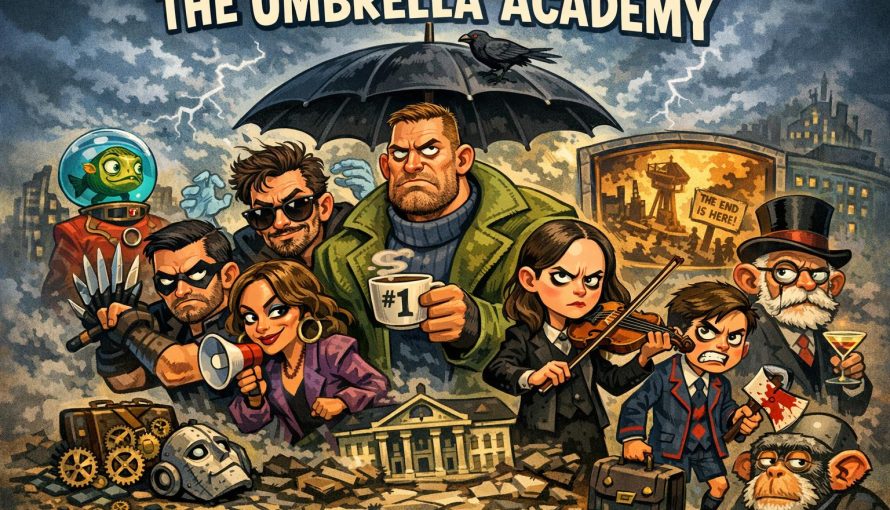
The Umbrella Academy Overview
The Umbrella Academy is an American superhero television series adapted from the comic books written by Gerard Way and illustrated by Gabriel Bá. Released on Netflix, the show stands out within the superhero genre by focusing less on conventional heroism and more on fractured relationships, psychological tension, and the unintended consequences of extraordinary abilities. While it incorporates familiar elements such as superpowers and apocalyptic threats, its narrative is shaped by a combination of family drama, dark humor, and nonlinear storytelling.
Set in a stylized version of reality that blends contemporary settings with retro influences, the series presents a world in which extraordinary events coexist with ordinary human struggles. From its opening premise—43 women around the world simultaneously giving birth despite having shown no signs of pregnancy—the story immediately establishes a surreal and unconventional tone. Sir Reginald Hargreeves, an eccentric and emotionally distant billionaire, adopts seven of these children and raises them as a team of young superheroes known as The Umbrella Academy. However, rather than creating a cohesive unit, his rigid and often neglectful methods lead to long-term emotional consequences that define the characters well into adulthood.
Plot Summary
The central storyline begins years after the disbandment of the Academy. The siblings, now estranged and living separate lives, reunite following the sudden and suspicious death of their adoptive father. This event serves as the catalyst for the series’ overarching narrative, bringing together individuals who share a traumatic upbringing but possess conflicting perspectives and unresolved resentments.
As the siblings gather, it becomes clear that their father’s death is only one layer of a much larger mystery. The arrival of Number Five, who has the ability to travel through time, introduces the imminent threat of a global apocalypse. His warnings force the group to confront not only external dangers but also their own fractured relationships, which repeatedly hinder their ability to act as a unified team.
Time travel plays a significant role in the structure of the series. Events are frequently revisited and altered, creating parallel outcomes and complicating the narrative. This approach allows the story to explore different versions of characters depending on their circumstances while examining themes such as fate, free will, and causality. The blending of timelines contributes to an atmosphere of unpredictability, as actions taken to prevent disaster often produce unintended consequences.
Each season expands the scope of the narrative, introducing new settings, alternate timelines, and additional characters, while maintaining a focus on the central theme of a dysfunctional family attempting to reconcile their pasts. The apocalypse itself becomes less of a singular event and more of a recurring possibility, tied directly to the characters’ unresolved conflicts and emotional instability.
Main Characters
The Umbrella Academy’s strength lies largely in its character development. Each sibling is defined not only by their abilities but also by the psychological impact of their upbringing. Their powers often serve as extensions of their personalities or sources of personal struggle rather than straightforward advantages.
Number One, Luther Hargreeves, possesses superhuman strength and durability. As the leader of the group during childhood, he remains deeply loyal to their father’s vision, even after his death. Luther’s identity is closely tied to his role as the responsible sibling, yet this sense of duty often isolates him from the others. His transformation into a physically altered form further complicates his self-image and relationships.
Number Two, Diego Hargreeves, is highly skilled in combat and exhibits exceptional accuracy with thrown weapons. Unlike Luther, Diego frequently challenges authority and acts impulsively. His desire to prove himself as a hero leads him into conflict with both his siblings and external figures. Beneath his confrontational demeanor, he shows a persistent need for validation and purpose.
Number Three, Allison Hargreeves, has the ability to alter reality through the phrase “I heard a rumor,” effectively influencing others’ actions and perceptions. Her power raises ethical questions, as its use can blur the boundary between influence and control. Allison’s storyline often revolves around the consequences of relying on her abilities in personal relationships, leading her to question the morality of her own actions.
Number Four, Klaus Hargreeves, can communicate with the dead and, in later developments, manifest more advanced abilities involving the spiritual realm. Klaus initially uses substances to suppress his powers, indicating a deep discomfort with his connection to the afterlife. His character balances comedic elements with more serious themes, particularly regarding trauma and avoidance.
Number Five, who is known simply as Five, has the ability to travel through time and space. Physically appearing as a teenager due to a miscalculation in his powers, he possesses the mind of an older individual shaped by years of isolation in a post-apocalyptic future. Five is often the most pragmatic and focused member of the group, driven by the urgency of preventing catastrophic events.
Number Six, Ben Hargreeves, has the power to summon and control monstrous tentacles from another dimension. Although deceased before the main timeline of the series, Ben remains present through his connection with Klaus. His character provides insight into the lost potential of the Academy and highlights the emotional consequences of their upbringing.
Number Seven, Viktor Hargreeves (formerly Vanya), initially appears to be ordinary, having been told throughout childhood that he possesses no abilities. This belief significantly shapes his identity and sense of exclusion. It is later revealed that Viktor’s powers are among the most formidable, involving the manipulation of energy through sound. His storyline explores themes of repression, identity, and the effects of long-term emotional neglect.
Production and Development
The television adaptation of The Umbrella Academy was developed by Steve Blackman, who served as showrunner. While staying faithful to the core premise and characters of the original comics, the series introduces substantial changes to pacing, structure, and character interactions. These changes allow for deeper exploration of interpersonal dynamics and provide a more serialized narrative suitable for television audiences.
The visual style of the series is distinctive, characterized by a blend of modern settings with retro design elements. Costuming, set design, and color grading contribute to a sense of timelessness, positioning the story outside of a strictly defined historical period. This stylistic approach aligns with the series’ thematic emphasis on dislocation and temporal ambiguity.
Music plays a significant role in the show’s presentation. Carefully selected tracks are used to underscore emotional beats, transition between scenes, and reinforce the tone of specific sequences. Rather than relying solely on a traditional score, the series integrates well-known songs in ways that complement its narrative rhythm and visual storytelling.
The production also emphasizes practical effects combined with digital enhancements. Action sequences are often grounded in character perspective, focusing on the consequences of using powers rather than presenting them as purely spectacle-driven moments. This approach reinforces the series’ focus on character-driven storytelling.
Throughout its development, the show has evolved in response to both narrative demands and audience reception. Later seasons introduce expanded world-building, including alternate versions of the Academy and broader explorations of the origins of the characters’ abilities. These additions contribute to a more complex universe while maintaining continuity with the core themes established in earlier episodes.
Reception and Impact
The Umbrella Academy has received generally positive reception from both critics and audiences. Reviews frequently highlight its character development, narrative structure, and tonal balance between humor and darker subject matter. Unlike more traditional superhero narratives, the series is often recognized for prioritizing emotional complexity over straightforward heroism.
Critics have noted that the show’s willingness to explore flawed characters contributes to its appeal. Rather than presenting idealized figures, The Umbrella Academy depicts individuals who struggle with insecurity, resentment, and unresolved trauma. This approach allows viewers to engage with the characters on a more personal level, even within a fantastical context.
The use of music and visual composition has also been widely discussed, particularly in scenes where choreography and editing align with musical elements to create memorable sequences. These stylistic choices contribute to the show’s distinct identity within a crowded entertainment landscape.
Audience engagement has extended beyond viewership, with active discussions surrounding character arcs, timeline theories, and potential future developments. The layered narrative encourages interpretation and analysis, as viewers attempt to reconcile different timelines and character decisions.
The success of the series has reinforced the viability of unconventional superhero adaptations, demonstrating that the genre can accommodate narratives that deviate from standard formulas. By combining elements of science fiction, drama, and dark comedy, The Umbrella Academy occupies a unique position within contemporary television.
For more details and updates regarding the series, visit the official Netflix page of The Umbrella Academy.