Batman is a popular character that was designed and created by DC Comics. More specifically though, the character of Batman was created by the artist Bob Kane and the writer Bill Finger, and together they created the iconic crime-fighting detective. Batman first showed up in the “Detective” Comics in 1939 and was first called The Bat-Man. Other nicknames included The Dark Knight, Caped Crusader and World’s Greatest Detective, though it is the former two names that seem to have been carried over the most.
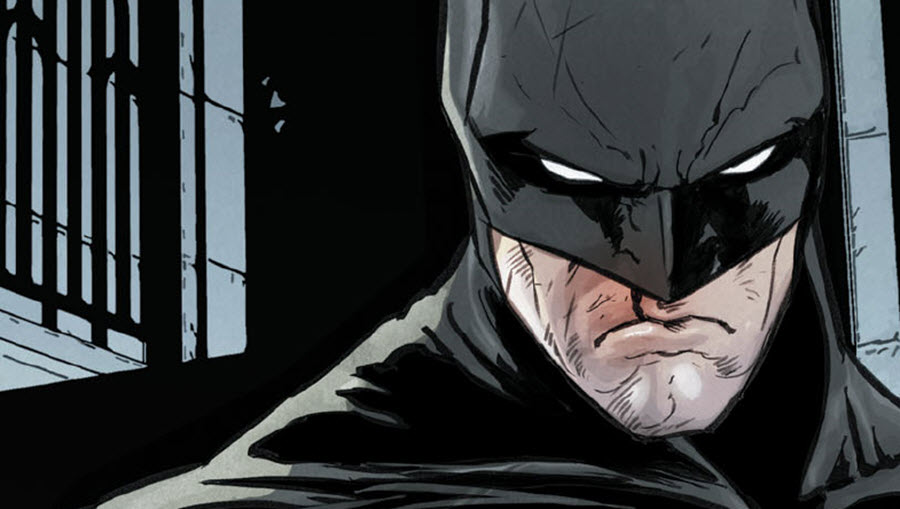
Batman’s Alter Ego
For many, the dark appeal of Batman stemmed from the fact that he didn’t have any extraordinary powers. Rather, the alter ego of Batman was simply Bruce Wayne, a rather eccentric billionaire investor. Using his vast wealth and diverse investment portfolio in the pursuit of justice, Bruce Wayne put his money and skills to good use, creating the persona of Batman with which he could fight crime and keep safe his home city of Gotham. He is pushed to this end because of his rather sad childhood, in which he witnessed his parents getting shot and killed in front of him by a mugger. From that time on, Bruce Wayne had sworn vengeance and therefore dedicated his life to his own training, both physically and intellectually. The bat imagery derived from his own fear of bats, which he translated to create something that would put fear into the criminals he sought to put away.
The Ups and Downs
On his initial release to the public, Batman gained so much popularity that the following year, in 1940; he was given his own comic. During the ensuing years, various incarnations of Batman have appeared, providing different interpretations as to the motives and emotional state of the character. A brief interlude in the comics was potentially marred by a rather camp TV show, depicting Batman in a much more light-hearted way than the comics. This image was to stick with the character for many years before Frank Miller’s Dark Knight Returns was able to restore the character to its darker and more serious roots.
Good and Bad
Due to his lack of any supernatural powers, Batman has quickly become one of the most identifiable of all the superheroes. Needless to say, the cultural impact of this character has been huge, with not just comics, but a number of standalone graphic novels, a TV show and various incarnations in film. With the ability to be reinvented time and time again, readers can pick and choose their favourite version of Batman, thus branching out to a wider audience and catering to a variety of different styles and ideals. Added to this are the rather murky shades that Batman occupies; often borderline as bad as the criminals from whom he defends the city. This grey area and more human character, prone to making mistakes, make Batman much easier to relate to (despite his huge wealth) than any other DC character, such as the eminently good Superman.
The vigilante status that Batman truly occupies is always a state up for debate. Is Batman truly deserving of the moniker superhero, or is he really something darker and much more sinister?
The Batman Comic Book Chronology (1939 – Modern Era)
Key publications, continuity shifts, iconic story arcs, and character transformations
Created by Bob Kane and Bill Finger, “The Bat-Man” debuts in The Case of the Chemical Syndicate as a grim, firearm-bearing pulp vigilante operating in Gotham City.
Dick Grayson is introduced as Robin the Boy Wonder in Detective Comics #38 to brighten tone and appeal to younger readers. Concurrently, Batman #1 introduces recurring adversaries The Joker and Catwoman.
Under Fredric Wertham’s censorship pressures, Batman shifts toward sci-fi and camp. In 1964, editor Julius Schwartz and artist Carmine Infantino launch the “New Look”, adding the yellow oval to the bat emblem and refocusing stories on classic detective roots.
Writer Dennis O’Neil and artist Neal Adams dismantle the 1960s TV camp influence, restoring Batman as a vengeful creature of the night and creating immortal eco-terrorist Ra’s al Ghul and daughter Talia.
Frank Miller, Klaus Janson, and Lynn Varley redefine the character worldwide with a dystopian, aged Bruce Wayne returning to reclaim a brutalized Gotham, fundamentally changing modern superhero comics.
Following Crisis on Infinite Earths, Miller and David Mazzucchelli rewrite Bruce Wayne’s first 12 months in the cape alongside Lieutenant James Gordon, establishing the definitive street-level canon for decades.
Alan Moore and Brian Bolland publish The Killing Joke, paralyzing Barbara Gordon. Months later, readers vote via 1-900 phone numbers to let the Joker murder second Robin Jason Todd in Batman #428.
Tactician Bane empties Arkham Asylum, exhausts Wayne, and snaps Batman’s spine. Anti-hero Jean-Paul Valley (Azrael) takes the mantle until a rehabilitated Bruce Wayne reclaims the cowl.
Following a cataclysmic 7.6 earthquake, the US government declares Gotham an abandoned exclusion zone, leaving Batman and his network to fight turf wars against rogue factions block by block.
Jeph Loeb and Jim Lee craft a 12-issue blockbuster arc introducing childhood surgeon friend Thomas Elliot (Hush) and setting up Jason Todd’s eventual return as the lethal vigilante Red Hood.
Grant Morrison introduces Bruce’s biological son Damian Wayne as Robin. Following Bruce’s apparent death in Final Crisis, Dick Grayson serves as Batman until Bruce returns and forms the global organization Batman Incorporated.
Scott Snyder and Greg Capullo launch an acclaimed run introducing The Court of Owls, a centuries-old clandestine Gotham aristocracy, followed by high-stakes arcs Death of the Family and Zero Year.
Tom King’s 85-issue run explores Bruce Wayne’s psychological limits, centering on his complex romance with Selina Kyle (Catwoman), the assassination of father-figure Alfred Pennyworth, and Bane’s hostile takeover of Gotham.
Current runs by Chip Zdarsky and DC’s unified Dawn of DC line see Bruce battle his own unhinged contingency persona—the Batman of Zur-En-Arrh—and the robotic enforcer Failsafe across an expansive multiverse backdrop.